HiPP Comfort vs Anti-Reflux

We earn a commission when you buy through links on this page, including from our partner retailer, which sells and ships the order. How this site is funded →
The answer
HiPP Comfort and HiPP Anti-Reflux are built in opposite directions for two different problems. Comfort splits the whey protein and cuts the milk sugar to 2.7 g per 100 ml, replacing it with maltodextrin and starch. Anti-Reflux leaves the protein intact and keeps all 6.9 g of its lactose, and thickens the feed with carob bean gum instead. Both are foods for special medical purposes, both say to use them under medical supervision, and neither is for a cow's milk protein allergy.
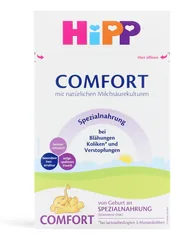 HiPP German Comfort2313 · 600 g boxSplit protein, less than half the milk sugar, starch and maltodextrin instead.
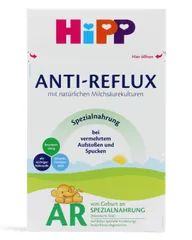 HiPP German Anti-Reflux2304 · 600 g boxIntact protein, all of its lactose, and a gum that thickens the feed.
Key takeaways
- Comfort changes the protein and the sugar; Anti-Reflux changes neither and changes the texture.
- Lactose is 2.7 g per 100 ml in Comfort and 6.9 g in Anti-Reflux.
- Both print a fibre figure, but it is a different substance: galacto-oligosaccharides in Comfort, carob bean gum in Anti-Reflux.
- Both are foods for special medical purposes under Regulation (EU) 2016/128, to be used under medical supervision.
- Both German packs carry the same line ruling out a cow's milk protein allergy.
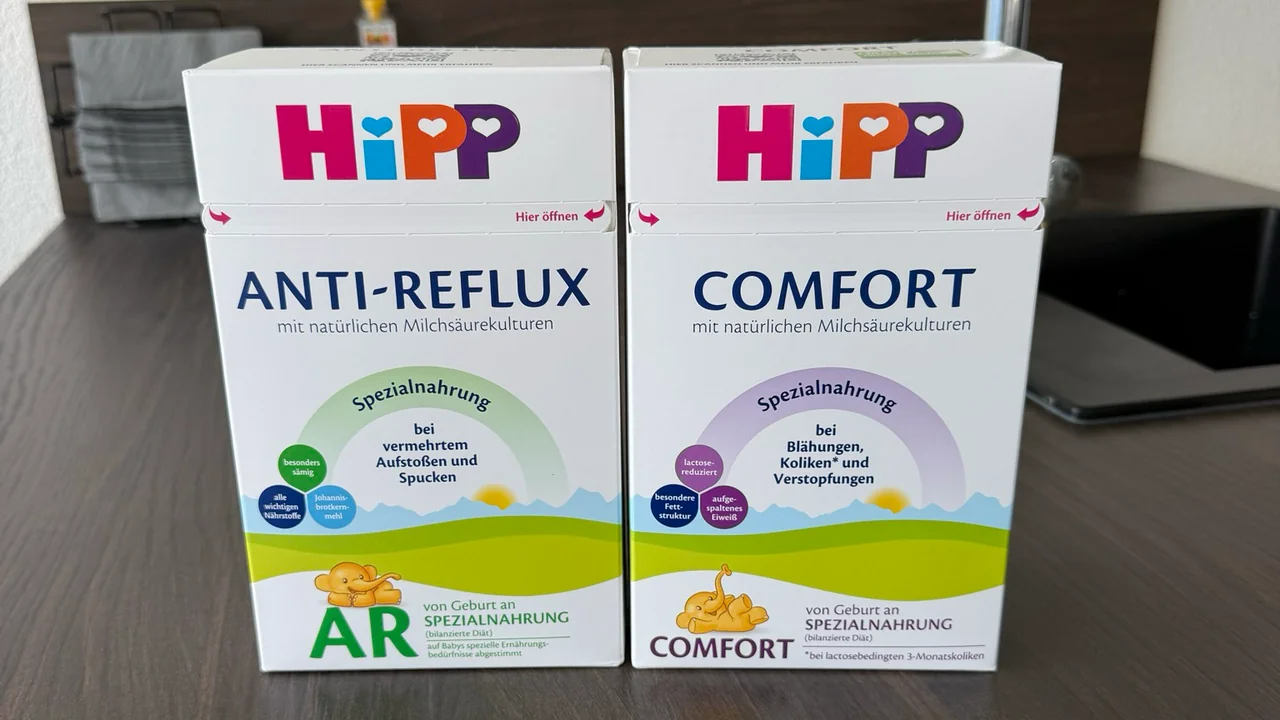
How do HiPP Comfort and Anti-Reflux compare?
| HiPP German Comfort | HiPP German Anti-Reflux | |
|---|---|---|
| Age | From birth | From birth |
| Size | 600 g box | 600 g box |
| Article code | 2313 | 2304 |
| Base | Cow's milk whey protein, hydrolysed | Cow's milk: skimmed milk and whey product (intact cow's milk protein) |
| Protein | 1.25 g | 1.25 g |
| Carbohydrate | 7.0 g · Lactose, maltodextrin and starch | 6.9 g · Lactose only |
| Starch | Yes | No |
| Fat | 3.6 g | 3.6 g |
| DHA | 13.2 mg | 13.2 mg |
| GOS | 0.3 g | Not recorded |
| Combiotik | GOS + L. fermentum | L. fermentum only |
| Scoop | 4.3 g per 30 ml | 4.3 g per 30 ml |
| Price at Organic Life Start, United States | $40.79 · $6.80 per 100 g | $40.79 · $6.80 per 100 g |
Nutrition from each product's panel, fetched 15 October 2026. Prices seen 15 October 2026.
What does each one change?
Opposite things, which is the whole answer.
Comfort changes the protein and the sugar. Its whey protein is split, its lactose is cut to 2.7 g per 100 ml, and maltodextrin and 1.5 g of starch make up the energy that lactose no longer supplies.1
Anti-Reflux changes neither. Its protein is intact cow's milk protein, not broken down at all, and it keeps every gram of its lactose, 6.9 g per 100 ml, with no starch and no maltodextrin. What it changes is the texture: carob bean gum thickens the feed so that it is heavier in the stomach.25
One row makes the contrast neatly. Both panels print a fibre figure, 0.3 g in Comfort and 0.4 g in Anti-Reflux, and it is a different substance in each: galacto-oligosaccharides in one, the thickening gum in the other.12
What is each one sold for?
HiPP sells Comfort for the dietary management of wind, colic linked to lactose and constipation, to be used after talking to a paediatrician and only as long as the symptoms need.3 It sells Anti-Reflux for the dietary management of reflux and regurgitation, under medical supervision.4
The NHS describes both categories and is blunt about one of them. Comfort formulas are supposed to make digestion easier and help prevent colic and constipation, it writes, but there is no evidence for this. Anti-reflux formula it describes rather than assesses: thickened, suitable from birth only under medical supervision, and prepared differently from standard formula.6
Is either for a cow's milk allergy?
No, and both German packs carry the same line: not to be used if a baby has, or is suspected of having, a cow's milk protein allergy.12
Anti-Reflux is the further of the two from being suitable, because its protein is not broken down at all. The NHS says a baby diagnosed with a cow's milk allergy is prescribed a formula with fully hydrolysed proteins, and that partially broken-down comfort formula is not suitable either.6
Which is harder to live with?
Anti-Reflux, in every market. It has to stand and thicken before it is fed, it needs a single fast-flow teat, and HiPP UK's tin asks for water cooled far longer than any other pack it sells, which its own page sets out in full.5
Comfort is made up like any other HiPP powder: the same 4.3 g scoop to 30 ml of water, at the same 40 to 50 °C the German boxes ask for.1
Questions parents ask
What is the difference between HiPP Comfort and Anti-Reflux?
What each one changes. Comfort splits the whey protein and cuts the lactose to 2.7 g per 100 ml. Anti-Reflux keeps the protein intact and all 6.9 g of its lactose, and thickens the feed instead.
Which one is for reflux?
Anti-Reflux, by name and by design: the carob bean gum is there to make feeds heavier so they stay down.
Which one is for colic?
Comfort is the one HiPP sells for wind, for colic linked to lactose and for constipation. Whether it works is another matter: the NHS says comfort formulas are supposed to make digestion easier and help prevent colic and constipation, but that there is no evidence for this. That is worth knowing before a tin is bought on the strength of the name.
Do both need a doctor?
Both are foods for special medical purposes, and both packs say to use them under medical supervision. Ask before either, not after.
Is either one for a cow's milk allergy?
No, and both German packs carry the same line: not to be used if a baby has, or is suspected of having, a cow's milk protein allergy. Anti-Reflux is the further of the two from being suitable, because its protein is not broken down at all. A diagnosed allergy is a question for the doctor who made it.
Can a baby have both?
Ask the prescriber who suggested the first one. HiPP UK's Anti-Reflux pack says in as many words not to use it alongside antacids or other feed thickeners.
Is one easier to prepare?
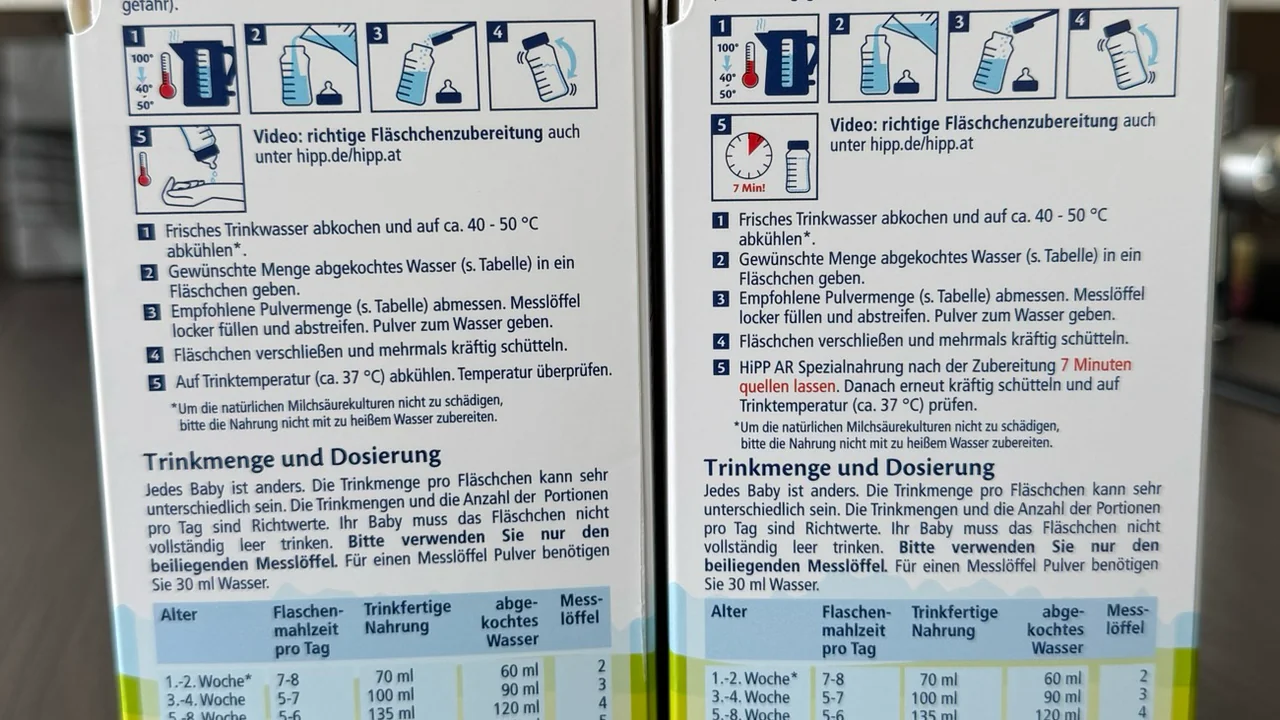
Comfort is. Anti-Reflux has to stand and thicken before feeding, needs a fast-flow teat, and in Britain is made up with cooler water than any other HiPP tin, which its own page covers.
Do they cost the same?
Close. Both come in a 600 g box in Germany and the table above prices each per 100 g, which is the fair comparison when the packs match.
Are they organic?
Neither, in any market. HiPP's foods for special medical purposes sit outside its organic ranges entirely, which surprises people who know the brand for the Bio boxes, and the ingredient lists carry no organic marks at all.
Are the UK versions the same?
The UK Comfort matches the German box on every row both print. The UK Anti-Reflux is close but not identical, and it lists no lactic culture.
Sources
- HiPP pack artwork for HiPP Comfort Spezialnahrung 600 g, version 6 (April 2025) the hydrolysed whey protein, the lactose-reduced statement, the carbohydrate as lactose, maltodextrin and starch, the galacto-oligosaccharides, the composition per 100 ml and the cow's milk protein allergy line fetched 23 September 2026
- HiPP pack artwork for HiPP AR Spezialnahrung (Anti-Reflux) 600 g, version 7 (May 2025) the intact cow's milk protein, lactose as the only carbohydrate, the carob bean gum counted as fibre, the composition per 100 ml and the same allergy line fetched 23 September 2026
- HiPP Germany product page for HiPP Comfort Spezialnahrung what HiPP sells Comfort for: the dietary management of wind, colic linked to lactose and constipation, after talking to a paediatrician and only as long as the symptoms need fetched 23 September 2026
- HiPP Germany product page for HiPP Anti-Reflux Spezialnahrung what HiPP sells Anti-Reflux for: the dietary management of reflux and regurgitation, under medical supervision fetched 23 September 2026
- HiPP UK, product page for HiPP Anti-Reflux Milk the thickener named as carob bean gum; the instruction not to use the product with antacids or other feed thickeners; the single fast-flow teat; the seven minute stand and the 45 minute cool fetched 23 September 2026
- NHS, Types of formula comfort formula is supposed to help with colic and constipation but there is no evidence for this, and is not suitable for a cow's milk allergy; anti-reflux formula is thickened, is for use only on medical advice, and is prepared differently fetched 23 September 2026
- Commission Delegated Regulation (EU) 2016/128 food for special medical purposes: for the dietary management of a condition, used under medical supervision, and for infants made to the infant formula rules except where the intended use requires otherwise fetched 23 September 2026