HiPP water temperature

The answer
HiPP's German, Dutch and export labels ask you to boil fresh water and let it cool to 40 to 50 °C before the powder goes in, to protect the lactic culture. The WHO and the CDC ask for water of at least 70 °C, because powdered formula is not sterile and that heat kills what may be in it. HiPP's own British labels take the second position. This page states both and leaves the choice with your pediatrician.
Key takeaways
- HiPP's German, Dutch and export packs say 40 to 50 °C, and say why: hotter water damages the lactic culture.
- The WHO and the CDC say at least 70 °C, because powdered formula is not a sterile product.
- HiPP's British packs say boil, then cool for no more than 30 minutes, which is the 70 °C method in other words.
- So HiPP gives two different instructions in two markets, for formulas whose panels are nearly identical.
- A ready-to-feed bottle sidesteps the question: it is sterile until you open it, and nothing is added.
Boil fresh drinking water.
The WHO, the CDC and the NHS
Powder in at 70 °C or hotter, to kill what the powder may carry.
So do HiPP's British packs: within 30 minutes of the boil.
HiPP's German, Dutch and export packs
Powder in at 40 to 50 °C, to protect the lactic culture.
What does the HiPP pack say?
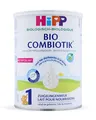
Boil fresh drinking water, let it cool to 40 to 50 °C, then add the powder. The Dutch tin prints the reason beside it: do not pour boiling water on the powder, so as not to damage the lactic acid cultures.1
That instruction is on every German, Dutch and export pack this site records. The British packs are the exception, and they say something else.15
Why do the WHO and the CDC ask for 70 °C?
Because powdered infant formula is not sterile. The WHO's 2007 guidance says so plainly, and asks for water no cooler than 70 °C so that the heat kills Cronobacter sakazakii and Salmonella in the bottle itself.2
Those infections are rare and can be severe in a newborn. The CDC writes its own version for the babies most at risk: under two months, born early, or with a weakened immune system.3
Why does HiPP say both things?
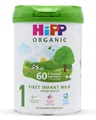
Because HiPP writes its instructions per market. Its British labels say to boil the water and leave it no more than 30 minutes before making the feed, which is the NHS method and keeps the water at or above 70 °C.45
So the same company asks for cooler water in Germany and hotter water in Britain, for formulas whose panels are nearly identical. The difference is in the labelling, not in the milk.15
So which should you follow?
Ask your pediatrician, and tell them which pack you have. This site does not hold a view on which temperature is right for your baby, and anyone who tells you the answer is simple is choosing one source and hiding the other.23
What the two sides are weighing: the 70 °C rule protects against a rare but serious infection, and the guidance aims it hardest at the first two months. The cooler water protects a culture whose benefit HiPP describes and does not quantify. Which of those matters more for your baby is a clinical judgement, and this site does not make it.123
If you follow the 70 °C route, the NHS method needs no thermometer: boil, cover, and get the powder in within 30 minutes.4
Does ready to feed avoid the question?
Yes. A sealed ready-to-feed bottle is sterile until you open it, so there is no water to boil and no powder to kill anything in. The German PRE bottle, for one, may be given at room temperature or warmed in a water bath to about 37 °C.6
That is why the CDC names ready-to-feed formula for the case where water cannot be made safe by boiling at all.3
Products mentioned
Questions parents ask
What temperature should the water be for HiPP formula?
HiPP's German and Dutch labels say 40 to 50 °C; the WHO and the CDC say at least 70 °C. The two do not agree, and your pediatrician is the one to settle it.
Do you have to boil the water for HiPP formula?
Yes, on every HiPP label. What differs is how long you let it cool afterwards: the German and Dutch packs want it down to 40 to 50 °C, the British packs want the powder in within 30 minutes of the boil.
Why does HiPP say not to use hot water?
To protect the lactic culture. HiPP adds Limosilactobacillus fermentum to most of its powders, it is a live culture, and the Dutch tin says in as many words not to pour boiling water on the powder so as not to damage it. That is HiPP's reason about its own product rather than a food safety finding, and we grade it that way.
Why do the WHO and the CDC say 70 °C?
Because powdered infant formula is not sterile. It can carry Cronobacter sakazakii and Salmonella, which are rare but can be severe in a newborn, and water at 70 °C or above kills them in the bottle rather than leaving a parent to hope the tin was clean. The WHO published the guidance in 2007, the CDC repeats it, and the NHS builds its whole method around it.
Which should I follow?
Ask your pediatrician, and say which HiPP pack you have. The WHO and CDC advice is aimed hardest at babies under two months, born early or with a weakened immune system; HiPP's cooler water is aimed at keeping a culture alive that a healthy older baby may not need.
Does 70 °C water destroy the probiotic in HiPP?
HiPP says water that is too hot harms the culture, which is the whole reason it asks for the cooler water. What nobody publishes, HiPP included, is how much of the culture survives at any particular temperature, so we cannot tell you what 70 °C costs you. We can only tell you that HiPP says it costs something.
Why does HiPP say something different in Britain?
HiPP does not explain it. Its British labels follow the national advice that the NHS gives, its German and Dutch labels follow the culture, and the formulas behind those labels are close to identical. The difference is in the instructions rather than the milk.
How do I get water to 70 °C without a thermometer?
Boil it and leave it no more than 30 minutes, which is the NHS method: a litre of freshly boiled water in a covered kettle is still above 70 °C for about that long. Less water cools faster.
Can I boil the water, cool it, then warm it again?
No. The heat has to be there when the powder meets the water, so reheating a cold kettle does nothing. Boil fresh water.
Is bottled or filtered water better?
The NHS says bottled water is not usually recommended for making up feeds, because it is not sterile and may carry too much sodium or sulphate. Boiled tap water is the default unless your water supply is unsafe, and then the CDC's advice is ready-to-feed formula.
Does any of this apply to ready-to-feed HiPP?
No. A sealed bottle is sterile and nothing is added, so there is no water to boil; the German PRE bottle may even be given at room temperature, or warmed to about 37 °C.
Sources
- HiPP Netherlands, label of HiPP 1 Bio Combiotik (NL2472-03) boil fresh drinking water and cool it to 40 to 50 °C; do not pour boiling water on the powder, so as not to damage the lactic acid cultures fetched 18 September 2026
- WHO and FAO, Safe preparation, storage and handling of powdered infant formula: guidelines, 2007 powdered infant formula is not a sterile product; reconstitute with water no cooler than 70 °C to reduce the risk from Cronobacter sakazakii and Salmonella fetched 18 September 2026
- CDC, Infant formula preparation and storage for a baby younger than two months, born prematurely or with a weakened immune system, boil the water and wait about five minutes before mixing; where water cannot be made safe, use ready-to-feed formula fetched 21 September 2026
- NHS, Making up baby formula boil the water, leave it to cool for no more than 30 minutes so it stays at 70 °C or above, then add the powder; bottled water is not usually recommended because it is not sterile fetched 18 September 2026
- HiPP UK, product page for HiPP Organic First Infant Milk the British preparation instructions: boil fresh water and leave it to cool for no more than 30 minutes before making the feed fetched 18 September 2026
- HiPP pack artwork for HiPP PRE Bio Combiotik trinkfertig 200 ml (2227-05), version V1 05/26 a ready-to-feed bottle: nothing is added, room temperature or warmed in a water bath to about 37 °C, never in a microwave fetched 25 September 2026
- Regulation (EU) 2016/127 what an infant formula must contain and what its label must say; preparation temperature is not among the harmonised requirements fetched 18 September 2026
Corrections (1)
- The page had said a ready-to-feed bottle is warmed to about 40 °C if it is warmed at all, from the German PRE bottle's label. That bottle's 2026 print allows a room-temperature feed, or warming in a water bath to about 37 °C, and the page now says so.