Mixing HiPP formula with breast milk

The answer
Nobody official answers this question directly. No HiPP pack gives an instruction for a bottle holding both, and neither the NHS's formula pages nor the CDC's feeding questions address it. What is instructed is narrower: HiPP's pack says to make the formula up with water, at the dilution and temperature it prints. Combination feeding itself is well covered, and the advice there is about your milk supply rather than about the bottle. Ask your midwife or pediatrician.
Key takeaways
- No HiPP pack instructs on a bottle holding both. Its instruction is water, at the dilution and temperature it prints.
- EU law requires the breastfeeding notice on the box, so it is a legal particular rather than a courtesy.
- The front of the same box reads Ideal zum Zufüttern, ideal for topping up, which is HiPP addressing exactly this reader.
- The NHS advice on combining is about your supply: introduce formula gradually, and expect your supply to fall.
- Mix a bottle and the formula's clock governs it, so what your baby leaves is thrown away, expressed milk included.
Can formula and breast milk go in the same bottle?
Nobody with authority has written the answer down. HiPP's packs instruct water and say nothing about a bottle holding both.19
The health bodies are no more forthcoming. The NHS page of common formula questions does not mention breast milk at any point, and the CDC, asked how much to feed a baby who is having both, answers that it may differ and to talk to the baby's doctor or nurse.57
What is instructed is narrower and worth separating from the silence. The powder goes into a stated volume of water, at a stated temperature, at the dilution the pack prints, and that dilution is what the nutrition panel on the side of the box describes.96
What does HiPP say about topping up?
On the front of the box, plainly: Ideal zum Zufüttern, ideal for topping up. The ready-to-feed sleeve carries the same line and adds that it also serves as the only ready-to-feed milk from birth.12
So HiPP addresses the topping-up parent in its marketing while giving that parent no instruction for the bottle. Those two facts sit on one pack, a few centimetres apart.12
The same panel makes a smaller claim worth reading carefully. HiPP says the lactic culture it adds was originally obtained from breast milk, and that breast milk holds many natural cultures which differ from person to person.1
Why is the breastfeeding notice on the box at all?
Because the law puts it there. Article 6(2) of Regulation (EU) 2016/127 lists it as a mandatory particular for infant formula: a statement on the superiority of breast feeding, together with a recommendation that the product be used only on the advice of a qualified professional.3
The German box prints both, and names who to ask: speak to your pediatrician or your midwife before using an infant formula.1
The same article requires something the front of the box does not echo. The pack must state that the product suits infants from birth when they are not breast fed, which is the law describing formula as the food for a baby who is not being breastfed, while the front sells it as the food you add to breastfeeding.31
How do you top up without losing your supply?
This part is well covered, and none of it is ours. The NHS says introducing formula feeds can affect how much milk you produce, so its advice is to introduce them gradually rather than all at once, which also lowers the chance of swollen breasts or mastitis.4
It adds a caveat in its own careful words: there is a small amount of evidence that babies may not breastfeed as well afterwards, because they learn a different sucking action at the bottle.4
If you want to move the other way, back towards the breast, the NHS asks for regular expressing, about eight times a day including once at night, and skin to skin contact. It also points out that a baby of six months or more who drinks from a cup may not need a bottle at all.4
This section carries no evidence grade, and the reason is worth stating. Our grades run from a regulatory requirement down to no evidence found, and health service guidance about your own body fits none of them: the NHS refers to a small amount of evidence without citing it, and puts no figure on how much supply falls or for whom. Grading that A would dress guidance up as law, and grading it E would read as though nothing were known. So the page attributes it instead, and names the people the NHS says to ask: your midwife, your health visitor or a breastfeeding supporter, and the helpline it runs for this question.4
If you do mix a bottle, what governs it?
The shorter clock. A bottle holding formula follows the formula rules, which the CDC puts at two hours from making it up and one hour from the start of the feed.8
What that costs you is expressed milk. HiPP's labels say not to reuse leftover milk and the CDC says to throw out what is left in the bottle after a feed, so whatever your baby leaves goes down the sink with the formula.18
Which is the argument for mixing no more than a feed's worth at a time, or for keeping the top-up in its own bottle so a refused feed costs you formula rather than milk you sat up expressing.86
Products mentioned
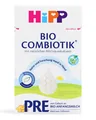 HiPP German PRE
Sold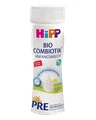 HiPP German PRE ready to feed
Where to buy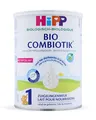 HiPP Dutch Stage 1
Sold
Questions parents ask
Can you mix HiPP formula with breast milk in the same bottle?
No source we can cite answers it. HiPP's packs instruct water and say nothing about a bottle holding both, the NHS's formula questions page does not mention breast milk once, and the CDC's answer on feeding both is to talk to your baby's doctor or nurse. That silence is the honest answer, and your midwife is the person to break it.
Can I use breast milk instead of water to make up HiPP powder?
The pack does not provide for it. Its instruction is a stated volume of water at a stated temperature, and the dilution it prints is what the nutrition panel describes.
Does HiPP say anything about combination feeding on the pack?
Yes, on the front. The German PRE box and the ready-to-feed sleeve both read Ideal zum Zufüttern, ideal for topping up, and the sleeve adds that it also works as the only ready-to-feed milk from birth. So HiPP addresses the topping-up parent directly in its marketing while giving no instruction for the bottle itself.
Why does a HiPP box say breastfeeding is best?
Because EU law requires it. Article 6(2) of Regulation (EU) 2016/127 makes a statement on the superiority of breast feeding a mandatory particular on infant formula, along with a recommendation to use the product only on professional advice.
Will topping up with HiPP reduce my milk supply?
The NHS says introducing formula feeds can affect how much milk you produce, which is why its advice is to do it gradually rather than at once. Doing it gradually also lowers the chance of swollen breasts or mastitis. It adds that there is a small amount of evidence that babies may not breastfeed as well afterwards, because the sucking action at a bottle differs.
Which HiPP formula is best for topping up?
HiPP labels the PRE for it, in both the powder and the ready-to-feed bottle. The more useful question is pack size, because an opened pack has 3 weeks whether you use it once a day or six times.
How long does a bottle of mixed breast milk and formula keep?
Treat it as formula, because the shorter clock is the one that governs. That means the CDC's two hours from making it up and one hour from the start of the feed, and no source on this site extends those because expressed milk is in the bottle too.
Do I have to throw away a mixed bottle my baby did not finish?
Yes, which is the practical argument against mixing more than a feed's worth. HiPP's labels say not to reuse leftover milk, so expressed milk in that bottle goes with the formula.
Is the lactic culture in HiPP the same as the one in breast milk?
HiPP says its L. fermentum was originally obtained from breast milk, and says on the same panel that breast milk holds many natural cultures which differ from person to person. That is a statement about where the culture came from, not a claim that the formula matches your milk. HiPP publishes no comparison of the two.
Can I breastfeed for most feeds and give one bottle of HiPP?
That is what the NHS calls mixed or combination feeding, and it describes wanting to give a bottle for one or more feeds as an ordinary reason for it. It asks you to introduce it gradually and to talk to your midwife.
Should I talk to someone before starting formula?
The pack says so because the law makes it say so: use it on qualified professional advice. HiPP's German box names your pediatrician or midwife.
Sources
- HiPP pack artwork for HiPP PRE Bio Combiotik 600 g, version 7 (May 2025) the front reads Ideal zum Zufüttern, ideal for topping up; Stillen ist das Beste für Ihr Baby, breastfeeding is best for your baby, with a note to speak to your pediatrician or midwife before using an infant formula; the lactic culture described as originally obtained from breast milk; no instruction for a bottle holding both fetched 22 September 2026
- HiPP pack artwork for HiPP PRE Bio Combiotik trinkfertig 200 ml (2227-05), version V1 05/26 ideal for topping up, and as the only ready-to-feed milk from birth; the same breastfeeding notice; the dental note that all infant formulas contain carbohydrates as breast milk does fetched 25 September 2026
- Regulation (EU) 2016/127, Article 6(2) the mandatory particulars for infant formula: a statement that it suits infants from birth when they are not breast fed; preparation, storage and disposal instructions with a warning against the health hazards of inappropriate preparation and storage; and a statement on the superiority of breast feeding with a recommendation to use the product only on qualified professional advice fetched 22 September 2026
- NHS, How to combine breast and bottle feeding introducing formula feeds can affect how much breast milk you produce; introduce it gradually to lower the chance of swollen breasts or mastitis; a small amount of evidence that babies may not breastfeed as well because the sucking action differs; express about eight times a day including once at night to build supply; from six months a cup may do instead of a bottle; page last reviewed 30 March 2023 fetched 22 September 2026
- NHS, Formula milk: common questions the NHS page of common formula questions, which does not mention breast milk at any point and so does not address a bottle holding both; page last reviewed 8 September 2023 fetched 22 September 2026
- NHS, How to make up baby formula water into the bottle first while it is still hot, then the powder; make up feeds one at a time as the baby needs them; throw away made-up formula left in the bottle after a feed fetched 22 September 2026
- CDC, Infant and toddler nutrition: frequently asked questions asked how much to feed a baby receiving both breast milk and infant formula, the answer is that how much and how often may differ and to talk with the baby's doctor or nurse; no amounts and no instruction for a single bottle; page dated 27 April 2026 fetched 22 September 2026
- CDC, Infant formula preparation and storage use prepared formula within two hours of preparation and within one hour from when feeding begins; throw out what is left in the bottle after a feed; page dated 14 May 2026 fetched 22 September 2026
- HiPP Netherlands, label of HiPP 1 Bio Combiotik (NL2472-03) the dilution as printed, one level scoop to 30 ml of water, and water boiled and cooled before the powder goes in fetched 22 September 2026
Corrections (0)
None since this page was published. How we correct mistakes